Present Joys

“We thank the Lord of heaven and earth
who hath preserved us from our birth
for present joys, for blessings past,
and for the hope of heaven at last.”

Carson Ellis is an inspiration to me in so many ways.

This is my Father’s world. I walk a desert lone.
In a bush ablaze to my wondering gaze God makes His glory known.
This is my Father’s world, a wand’rer I may roam
Whate’er my lot, it matters not,
My heart is still at home.

Did you guys know this song has more verses that nobody ever sings? This last one is particularly great. I love this song.

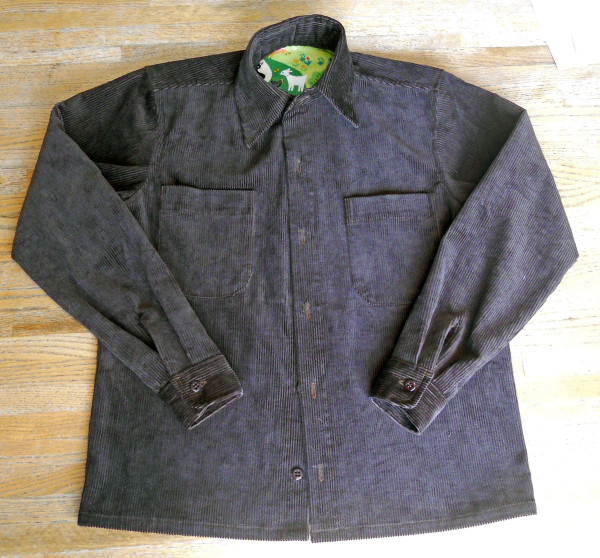
This week’s shirt is made from a ¼-inch blue gingham from Banasch’s fabrics. I originally thought the larger-size gingham would be more difficult to work with, but in the end I think I prefer it to the smaller stuff.

I don’t have much to say about this project, except that’s it’s as close to an ideal shirt as I’ve ever got. I cut down my pattern substantially (removing about 1” total from the armscye, and ½” from each side), but all changes were well-planned and thus work well. The fit of this slightly slimmer pattern is surprisingly good: I think I’ve really got something great here!

Construction of this shirt went off very smoothly, and I had a great time working with the fabric. Feeling very good. Next week: more gingham. Stay tuned, friends.

Back in the 1910s, a great swath was being cut diagonally across the [West] Village, to extend and widen Seventh Avenue below Greenwich Avenue and to allow the IRT subway to move farther downtown. Using the power of eminent domain, the city decisively condemned and demolished 300 pieces of property, including a five-story residential building called the Voorhis Apartment, owned by a Mr. David Hess.

Somehow, when all was said and done, Mr. Hess was left owning a small triangle of land. To add insult to injury, the city wanted him to “donate” the parcel, which would be incorporated into a new sidewalk. Hess refused. He defied municipal bullying and went to court to assert his rights. By the time the case was settled, “The D. H. Hess Estate of Philadelphia” was the obstinate owner of approximately 500 square inches of useless surface area.

But they made the most of it (symbolically speaking) when, on July 27, 1922, workers used black and yellow tile to create a defiant shoe-level inscription — which still exists today in its cracked, worn and eloquent state.

This proud plot remained the smallest piece of property in New York City well into the 1930s. Figuring the point had been made, the estate sold the tiny triangle to the owners of the cigar store in 1938 for $1,000. Today it remains a curious geometric reminder of a case where private property faced off against “progress” and came out the (admittedly modest) winner. SOURCE

Private property for the win. Imagine if all of New York’s streets and sidewalks were privately owned.

Originally reposted from
suitsandboots